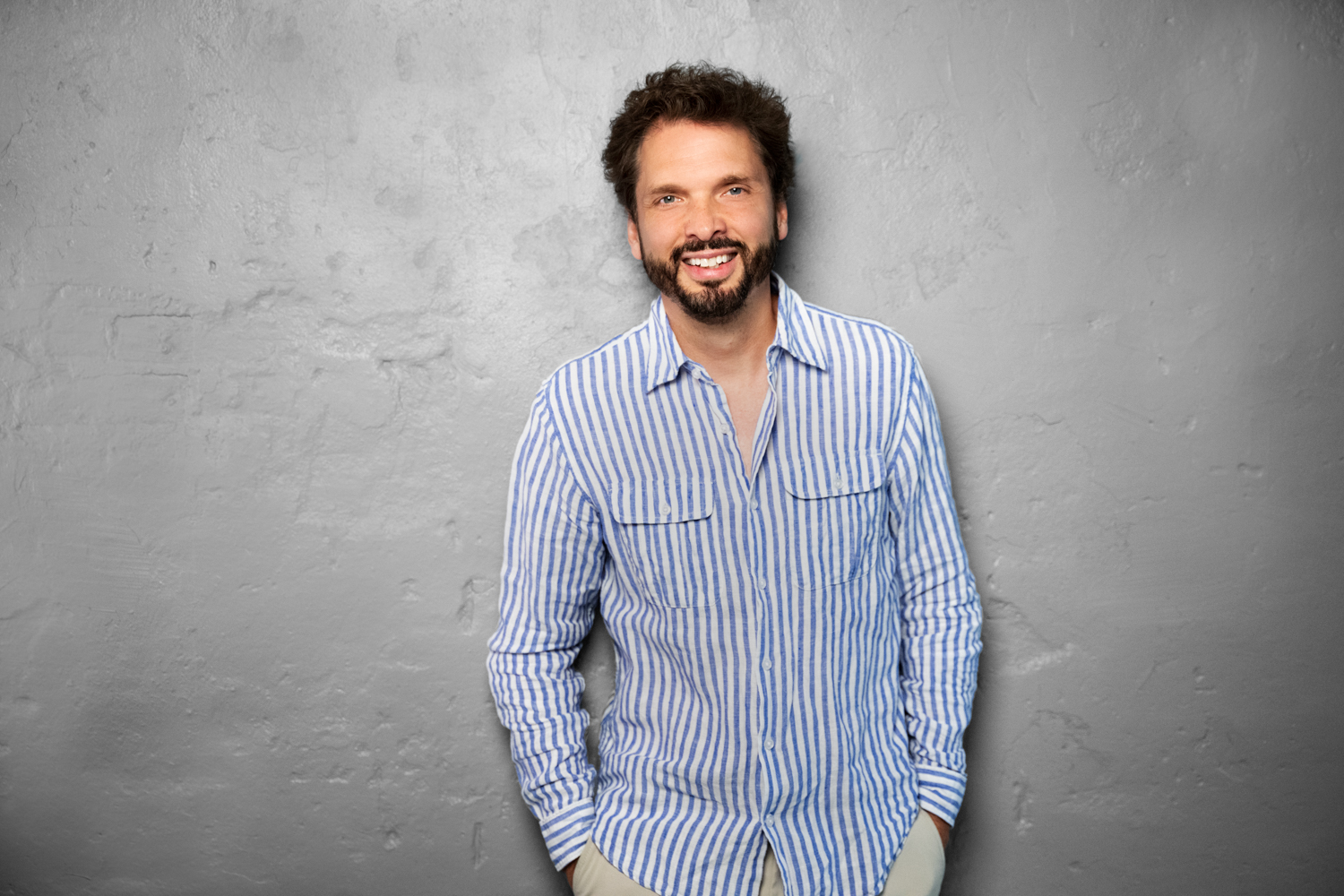
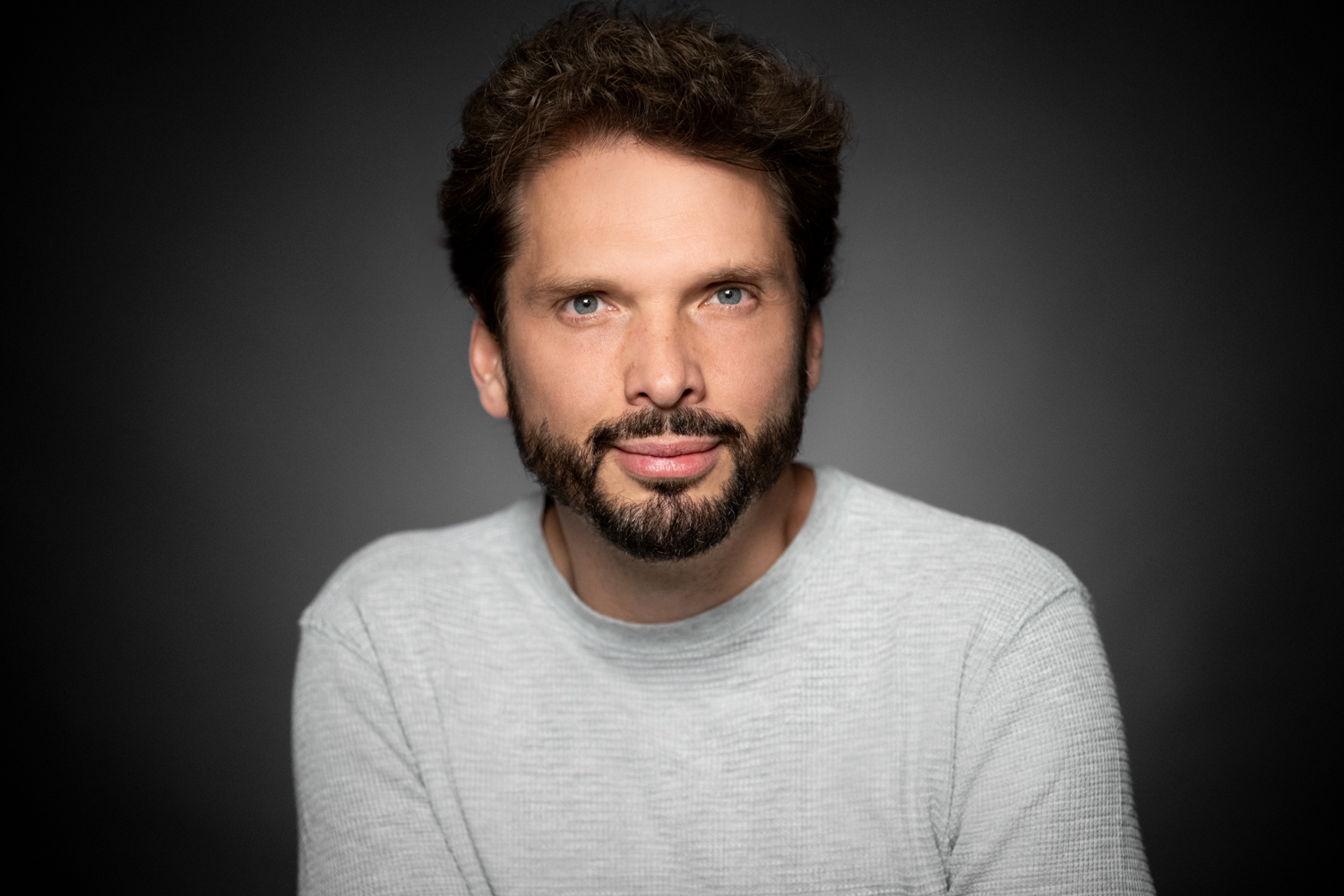
I am Hugo Aerts, a professor, scientist, and builder working to create a future where artificial intelligence helps us better understand, prevent, and treat disease.
Hugo Aerts
From AI Breakthroughs to Patient Impact

We are at a unique moment in history. Artificial intelligence has demonstrated extraordinary potential, yet meaningful transformation of healthcare remains limited. The challenge is not only to build larger models, but also to use these technologies to generate new biological insights, rigorously validate discoveries, and translate them into clinical practice.

My mission is to bridge that gap. By combining artificial intelligence, medicine, and scientific discovery, I work to uncover hidden signals in human biology — signals that can change how we understand aging, cancer, and disease. The goal is not simply to extend lifespan, but to extend healthy years of life.


Focus Areas
These are the areas I am currently working on — combining artificial intelligence, medicine, and biology to uncover new insights that can improve human health.
Immune Health
The immune system plays a central role in cancer, aging, infection, and chronic disease, yet many aspects of immune health remain invisible to medicine. My research focuses on developing new ways to measure immune function and resilience, with the goal of understanding why some individuals remain healthy while others become vulnerable to disease. Recent work has challenged long-standing assumptions about the adult thymus, revealing its important role in longevity, cancer, cardiovascular disease, and response to therapy.
Aging & Longevity
Aging is the single greatest risk factor for many of the world's most common diseases. My work seeks to develop new ways of measuring biological aging and resilience, helping to identify risk earlier and better understand the processes that shape health across the lifespan. Ultimately, the goal is not simply to extend lifespan, but to extend healthy years of life.

Cancer
Cancer remains one of the greatest challenges in medicine. My research focuses on uncovering hidden biological signals that can improve the prevention, diagnosis, and treatment of cancer. By combining artificial intelligence with clinical and imaging data, we seek to better understand why cancers develop, why patients respond differently to treatment, and how therapies can be tailored to each individual.
AI Foundation Models
Artificial intelligence has the potential to transform medicine, but meaningful clinical impact remains limited. My research develops foundation models and other AI technologies that help uncover new biological insights and accelerate scientific discovery. By combining advances in AI with rigorous clinical validation, we aim to bridge the gap between technological breakthroughs and improvements in human health.
Publications
Selected contributions spanning cancer, aging, immune health, and medical AI. Together, these studies reflect a common goal: using artificial intelligence and scientific discovery to uncover new biological insights and translate them into better prevention, diagnosis, and treatment of disease.
Nature
Nature · Immune Health
AI reveals the thymus as a key predictor of longevity and disease
A new AI biomarker of thymic health linked to mortality, cancer risk, and disease incidence in adults
Nature
Nature · Immune Health
Thymic health predicts response to immunotherapy in cancer patients
Patients with healthier thymus function show markedly better outcomes on immune checkpoint therapy
Nature Machine Intelligence
Nature Machine Intelligence · AI
A foundation model for cancer biomarker discovery
Self-supervised AI pre-trained on millions of medical images uncovers novel cancer biomarkers across organ systems
Lancet
Lancet · Perspective
Digitising the thymus — a new frontier for AI in medicine
Perspective with Eric Topol on the transformative potential of AI thymus biomarkers for human health
Lancet Digital Health
Lancet Digital Health · Aging
FaceAge — reading biological age from a photograph
AI estimates biological age from facial images with accuracy predictive of cancer survival and longevity
Nature Reviews Cancer
Nature Reviews Cancer · AI
How AI is reshaping the future of radiology and cancer care
A landmark perspective on the transformative impact of artificial intelligence across medical imaging and oncology
NEJM AI
NEJM AI · Cardiovascular
AI predicts cardiovascular disease across a major US health system
A scalable AI algorithm validated across a large healthcare network for cardiovascular risk prediction
Nature
Nature · AI
The case for transparency and reproducibility in medical AI
A vision article calling for higher standards of openness and rigor in the development of AI for medicine
Lancet Healthy Longevity
Lancet Healthy Longevity · Aging
AI approaches to measuring biological age
A perspective on how AI techniques — from imaging to multimodal models — can capture biological aging beyond chronological age
Nature Communications
Nature Communications · Cardiovascular
Deep learning predicts cardiovascular risk from routine radiology
A robust and scalable AI system that automatically extracts cardiovascular risk signals from standard radiological scans
Annals of Oncology
Annals of Oncology · Cancer
AI imaging biomarker predicts who benefits from immunotherapy
An AI-derived imaging biomarker identifies cancer patients most likely to respond to immune checkpoint treatments
Nature Communications
Nature Communications · AI
End-to-end reproducible AI pipelines for radiology in the cloud
An open platform enabling fully reproducible, scalable AI workflows for medical imaging research and clinical deployment
Full list on Google Scholar — 428 papers, 80k+ citations ↗
Media
My research has been covered by leading media outlets worldwide — from science journalism to broadcast news.
Featured in CNN The New York Times The Washington Post The Wall Street Journal Financial Times The Guardian NPR AFP The Telegraph The Independent la Repubblica DW CNN Brasil NDTV NRC
Selected highlights
CNN
CNN
How a selfie can reveal your biological age
Kara Swisher explores FaceAge and what AI-estimated biological age means for medicine
The Washington Post
Washington Post
The body's most mysterious organ may play a key role in longevity and cancer
A decades-old assumption about the thymus is overturned by AI analysis of 25,000 adults
Scientific American
Scientific American
This Overlooked Organ May Be More Vital for Longevity Than Scientists Realized
New research puts the thymus back on the map as a major player in healthy aging
The New York Times
New York Times
Can a Photograph Help Predict Who Will Survive Cancer Treatment?
FaceAge reads subtle facial signals — not wrinkles, but temple hollowing — to estimate biological age
WSJ
Wall Street Journal
Your Face Age and What It Reveals About Your Health
The science behind using a photograph to measure how quickly — or slowly — you are aging
The Boston Globe
Boston Globe
Can your facial features reveal your odds of surviving cancer?
Harvard researchers show that biological age — not chronological age — is what matters for prognosis
CNN
CNN This Morning
A single chest X-ray can predict your heart attack and stroke risk
AI turns one of medicine's most routine scans into a window on cardiovascular risk
FT
Financial Times
The AI tool that estimates your biological age from a single photograph
FaceAge could change how doctors assess patient resilience before treatment
The Times
The Times
I'm 52, my biological age is 32 — can that be true?
A journalist puts FaceAge to the test and discovers what their face says about their health
The Guardian
The Guardian
FaceAge: the AI tool that can tell your biological age through one photo
Why your face may be one of the most underused sources of medical information
NRC
NRC
De zwezerik heeft wél betekenis
Het orgaan dat decennialang werd genegeerd blijkt een sleutelrol te spelen in veroudering en kanker
The Washington Post
Washington Post
New AI tool predicts your biological age from a selfie
Cancer patients score five years older on average — and that gap predicts who survives
About

My name is Hugo Aerts (pronounced "arts") — a professor, scientist, and builder dedicated to improving human health through scientific discovery and artificial intelligence.

Over the past two decades, my work has focused on uncovering biological signals hidden within medical data. This research has contributed to the development of foundation models for medicine, and led to new insights into aging, cancer, and immune health. More recently, my team has challenged long-standing assumptions about the adult thymus, revealing its important role in longevity, cancer risk, and treatment response.

I serve as Professor at Harvard University, Director of the AI in Medicine Program at Mass General Brigham, and Adjunct Professor at Maastricht University, where I lead multidisciplinary teams of scientists, clinicians, and engineers working at the intersection of artificial intelligence, medicine, and biology.

My research is supported by major NIH-funded initiatives, and in 2020 I was awarded a prestigious ERC Consolidator Grant from the European Union's Horizon program. Since 2022, I have been recognised by Web of Science as among the top 1% most-cited scientists worldwide.

Originally from the Netherlands and now based in Boston, I remain inspired by the convergence of science, technology, and medicine — and by the possibility that the work we do today can meaningfully change the lives of patients tomorrow.

Contact
Hugo Aerts
Professor, Harvard University · Director, AIM Program MGB · Professor, Maastricht University
Emailhugo@hugoaerts.com
Labaim.mgh.harvard.edu
HarvardAI in Medicine (AIM) Program
Mass General Brigham
75 Francis St, Boston MA 02115
MaastrichtMaastricht University
P.O. Box 616, 6200 MD
The Netherlands
ScholarGoogle Scholar — 80k+ citations
PubMedPubMed publications
ORCID0000-0002-2122-2003
HarvardHarvard Profiles
Twitter@hugoaerts
LinkedInlinkedin.com/in/hugoaerts